
Why Are Teen Girls Experiencing More Anxiety in 2026?
Teen girls are experiencing high levels of anxiety because multiple pressures can overlap during adolescence, including academic expectations, social comparison, social media, body-image concerns, relationship stress, uncertainty about the future, and exposure to distressing events. Anxiety is influenced by many factors, so there is no single cause. For some girls, these pressures can become intense enough to interfere with everyday life.
At Orama Residential Treatment Center, we understand that anxiety in teen girls rarely exists in isolation. A young person may be struggling with school pressure, friendships, family relationships, trauma, depression, emotional dysregulation, or substance use at the same time. Orama provides compassionate, trauma-informed residential treatment for adolescent girls ages 13 to 17 in Denton, Texas. Our DBT-centered program combines structure, individualized support, evidence-based therapies, and experiential approaches to help girls understand what is driving their distress and develop healthier ways to cope. Rather than focusing only on reducing symptoms, effective adolescent mental health treatment should help a teen build emotional regulation, resilience, confidence, and stronger relationships.
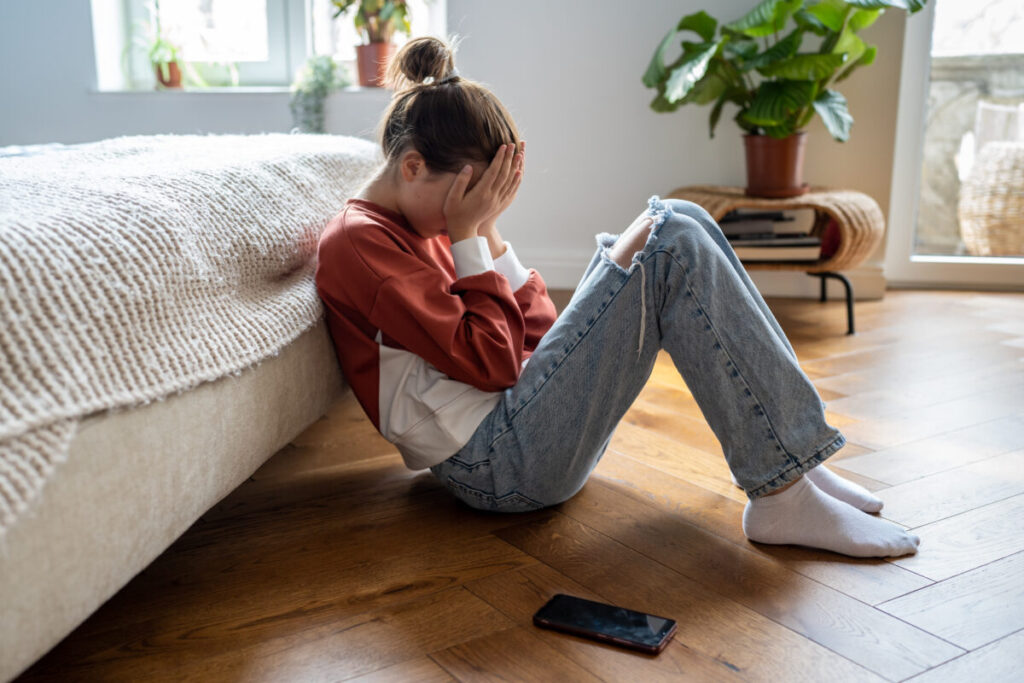
Understanding the Rise in Anxiety and Mental Health Challenges Among Teen Girls
Anxiety is not simply a teenager worrying too much. It can affect how a girl thinks, sleeps, socializes, performs at school, responds to stress, and feels about herself.
Youth mental health concerns have increased significantly over the past decade. The U.S. Department of Health and Human Services reports substantial increases in mental health challenges among young people, including anxiety, depression, and suicidal thoughts.
The Centers for Disease Control and Prevention’s 2023 Youth Risk Behavior Survey also found that female high school students were more likely than male students to experience indicators of poor mental health and suicidal thoughts and behaviors. While the CDC found some encouraging improvement between 2021 and 2023, including a decline in persistent sadness or hopelessness among female students, significant disparities remained.
Why Are So Many Teen Girls Anxious?
There is no single explanation for rising anxiety among teenage girls. Instead, anxiety can develop from a combination of biological, psychological, family, social, and environmental influences.
The American Psychological Association has identified several possible contributors to increasing anxiety among young people, including pressure to succeed academically, growing up with social media, and repeated exposure to frightening events and headlines.
For teen girls, everyday stressors can accumulate quickly. Common sources of pressure may include:
- Academic achievement and fear of failure
- College and future-career expectations
- Friendship conflicts and fear of rejection
- Social comparison
- Body-image and appearance concerns
- Family conflict or instability
- Bullying or cyberbullying
- Trauma or difficult past experiences
- Pressure to appear successful or happy
- Constant exposure to upsetting news
- Lack of sleep and overloaded schedules
A teen does not need to experience every one of these pressures to develop anxiety. What feels manageable to one adolescent may feel overwhelming to another.
Is Social Media Making Anxiety Worse for Teen Girls?
Social media may intensify anxiety for some teen girls, particularly when heavy use contributes to comparison, disrupted sleep, body-image concerns, or negative online experiences.
The American Psychological Association reported in 2024 that 41% of teens with the highest social media use rated their overall mental health as poor or very poor, compared with 23% of teens in the lowest-use group. The highest-use group was also more likely to report poor body image and suicidal intent or self-harm.
These findings do not mean that social media directly causes anxiety in every teenager. Social media can also provide friendship, creativity, identity exploration, and supportive communities.
Parents should therefore pay attention to the effect rather than screen time alone. Ask whether your daughter feels calmer, connected, and supported after spending time online, or whether she frequently leaves social media feeling inadequate, excluded, angry, or overwhelmed.
What Are the Warning Signs of Anxiety in a Teenage Girl?
Teen anxiety can appear as physical symptoms, emotional distress, avoidance, perfectionism, irritability, or changes in everyday functioning.
Parents may notice:
- Excessive worrying that is difficult to control
- Frequent reassurance seeking
- Irritability or emotional outbursts
- Difficulty falling or staying asleep
- Headaches, stomachaches, nausea, or other physical complaints
- Avoiding school, activities, or social situations
- Perfectionism and intense fear of making mistakes
- Difficulty concentrating
- Declining academic performance
- Withdrawal from friends or family
- Panic attacks
- Constantly expecting something bad to happen
- Changes in eating or sleeping patterns
- Using substances to escape uncomfortable feelings
Avoidance is particularly important to watch. Anxiety often encourages a teen to avoid whatever makes her uncomfortable. While avoidance may provide temporary relief, repeatedly avoiding school, social situations, responsibilities, or difficult emotions can make anxiety harder to manage over time.
How Can Parents Help a Teenage Girl With Anxiety?
Parents can help by creating an environment where anxiety can be discussed without judgment while encouraging healthy coping rather than reinforcing avoidance.
Start by listening. Instead of immediately trying to solve the problem, ask your daughter what she is worried about and how those worries affect her.
Parents can also:
- Keep routines predictable. Consistent sleep, meals, school expectations, and downtime can reduce unnecessary stress.
- Protect sleep. Encourage a regular bedtime and reduce late-night phone use.
- Avoid dismissing fears. Telling a teen to “stop worrying” rarely resolves anxiety. Acknowledge the feeling while helping her evaluate the situation realistically.
- Encourage gradual coping. Help her face manageable challenges rather than automatically avoiding everything that causes discomfort.
- Reduce unnecessary pressure. Consider whether overloaded schedules, perfectionism, or unrealistic expectations are contributing to distress.
- Model healthy coping. Teens learn from how adults respond to uncertainty, mistakes, conflict, and stress.
- Seek professional help when anxiety persists. Early support can prevent symptoms from becoming increasingly disruptive.
The goal is not to eliminate every stressful situation. Adolescence inevitably includes uncertainty and discomfort. The goal is to help a teen learn that she can experience difficult emotions without becoming controlled by them.
When Does Teen Anxiety Require Professional Treatment?
Professional support may be appropriate when anxiety is persistent, worsening, or interfering with school, relationships, sleep, physical health, responsibilities, or everyday activities.
Outpatient therapy can be effective for many teenagers. A qualified mental health professional can evaluate symptoms, identify contributing factors, and recommend an appropriate level of care.
For some families, however, outpatient treatment may not provide enough structure or support. Adolescent mental health residential treatment may be considered when symptoms are severe, a teen’s functioning has significantly deteriorated, safety concerns are present, or previous treatment has not provided enough stability.
At Orama Residential Treatment Center, girls ages 13 to 17 receive individualized care for anxiety, depression, trauma, substance use, self-harm, suicidal thoughts, school avoidance, emotional dysregulation, and relational struggles. Orama uses evidence-based approaches including Cognitive Behavioral Therapy (CBT), Dialectical Behavior Therapy (DBT), and EMDR, along with family therapy and experiential therapies.
A teen mental health residential program provides more than temporary separation from stress. The structured environment can help girls identify triggers, practice coping skills, regulate difficult emotions, rebuild relationships, and prepare to use those skills when they return home.
Frequently Asked Questions About Anxiety in Teen Girls
Why is anxiety more common in teenage girls?
There is no single cause. Biological development, social pressures, relationships, trauma, academic stress, body-image concerns, social comparison, and other environmental factors can all contribute to anxiety during adolescence.
How do I know if my daughter has anxiety or normal teenage stress?
Normal stress usually decreases after the stressful situation passes. Anxiety becomes more concerning when worry is excessive, difficult to control, persistent, or begins interfering with sleep, school, relationships, physical health, or everyday activities.
Can teenage anxiety go away on its own?
Mild or temporary anxiety may improve as circumstances change and teens develop coping skills. Persistent or worsening anxiety should not simply be ignored, especially when it causes avoidance, distress, or significant changes in everyday functioning.
When should residential treatment be considered for teen anxiety?
Residential treatment may be considered when anxiety significantly disrupts a teen’s ability to function, when safety concerns or co-occurring mental health challenges are present, or when outpatient treatment has not provided enough support. A clinical assessment can help determine the appropriate level of care.
Help Your Daughter Find a Healthier Way Forward
Anxiety can make a teenage girl’s world feel increasingly small, but effective treatment can help her learn to manage difficult emotions without allowing fear and avoidance to dictate her choices.
At Orama Residential Treatment Center, teen girls receive compassionate, structured care designed to address anxiety alongside the emotional, relational, and behavioral challenges that may be contributing to it.
Concerned that your daughter’s anxiety has become more than everyday teenage stress? Contact Orama Residential Treatment Center to learn whether residential treatment may be an appropriate next step for your family.